
🌟🌟
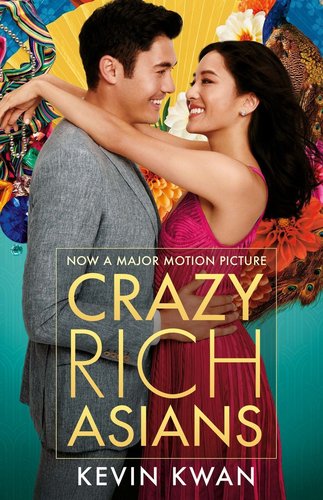
Rachel Chu is a thirty-something economics professor living in New York. This summer, her boyfriend Nicholas Young has invited her to come along with him to Singapore, where he is to be the best man for his friend’s wedding. There she will be meeting Nick’s family, and see the place he grew up in.
What Rachel has not been informed of is that Nick comes from a super rich family, and most of his relatives and the people they associate with judge everything—including people—by potential monetary value and family background. Nick is considered the country’s most eligible bachelor, so as Rachel arrives in Singapore, she steps into a crowd who hold against her both her poor family background and her close relationship to Nick.
Will their relationship survive the plots of schemers who wish to drive them apart?
First of all, I have to say as a disclaimer that I do not usually read books that are classified as chick lit. I prefer something faster paced, and maybe, darker? I read this because of the attention the book gained when the movie adaption came out, but in the end I don’t think I would have missed out on much by not reading the book.
It took me 17 days to read, and I could not dedicate my full attention to it. I had to keep switching to other ones, as I could not keep my attention on this book but did not want to give in and DNF it.
There are a few main things that make up a book, right? Plot, characters, and narrative/writing style. In this book, I was also looking at how the Asian culture was introduced to the readers.
This book just… proved mediocre on all points.
Most of the book was filled with shallow gossip, the tossing out of high fashion brand names, and not as much scheming as I would have liked. You knew that Rachel was disliked, but mostly the attitude was “let’s bide our time and observe” until the last quarter of the book when the plot begin to pick up somewhat. Until then, there wasn’t enough humor or drama for me, and points about the characters that could have been revealed through the story to make it more interesting were handed unceremoniously to you through the narrative and in flashbacks.
You learned almost everything that you needed to know in this story passively, and you also learned everything you didn’t need to know. The book was written in an omniscient POV, and it told way too much.
There were also two instances where I found myself reading through one and a half pages of italicized internal monologue. Too much.
As someone who also enjoys writing on the side, I also could not help but notice that Kevin Kwan liked to use fancy speech tags instead of simply “she/he said.”
My mother actually grew up in Singapore, and I have visited multiple times. So while I could not relate to the aspect of swimming in money (unfortunately or fortunately), one point in the book I did like was seeing some of what I am familiar with. Such as: the hawker centre (similar to a food court outdoors, except that each stall tends to specialize in one kind of food or a limited selection), and the lahs tacked on the end of many sentences.
But as the author tried to show readers this culture, it became really annoying to see all the asterisks leading to notes on the bottom for explanations. He also used this asterisk technique to introduce the backgrounds and histories of some places and people, and this led to it being not only annoying but excessive. Not all of the information was necessary, so I guess you could skip over it if you wanted, but it personally bugs me to know there are words down there I’m not reading.
Either work it into the story or leave it out, in my opinion.
I suppose this book could still be appealing to someone looking for a read that doesn’t require much close reading or depth—like a lay-on-a-beach-chat-with-some-friends-while-reading-at-the-same-time kind of read. Something to keep your mind mildly occupied while you sunbathe instead of lying there doing nothing?
I will not be going on to finish the series.

 Sea of Pages